Loading...
The ROI of Mindfulness Zones for Corporate Teams
Published on: April 2026
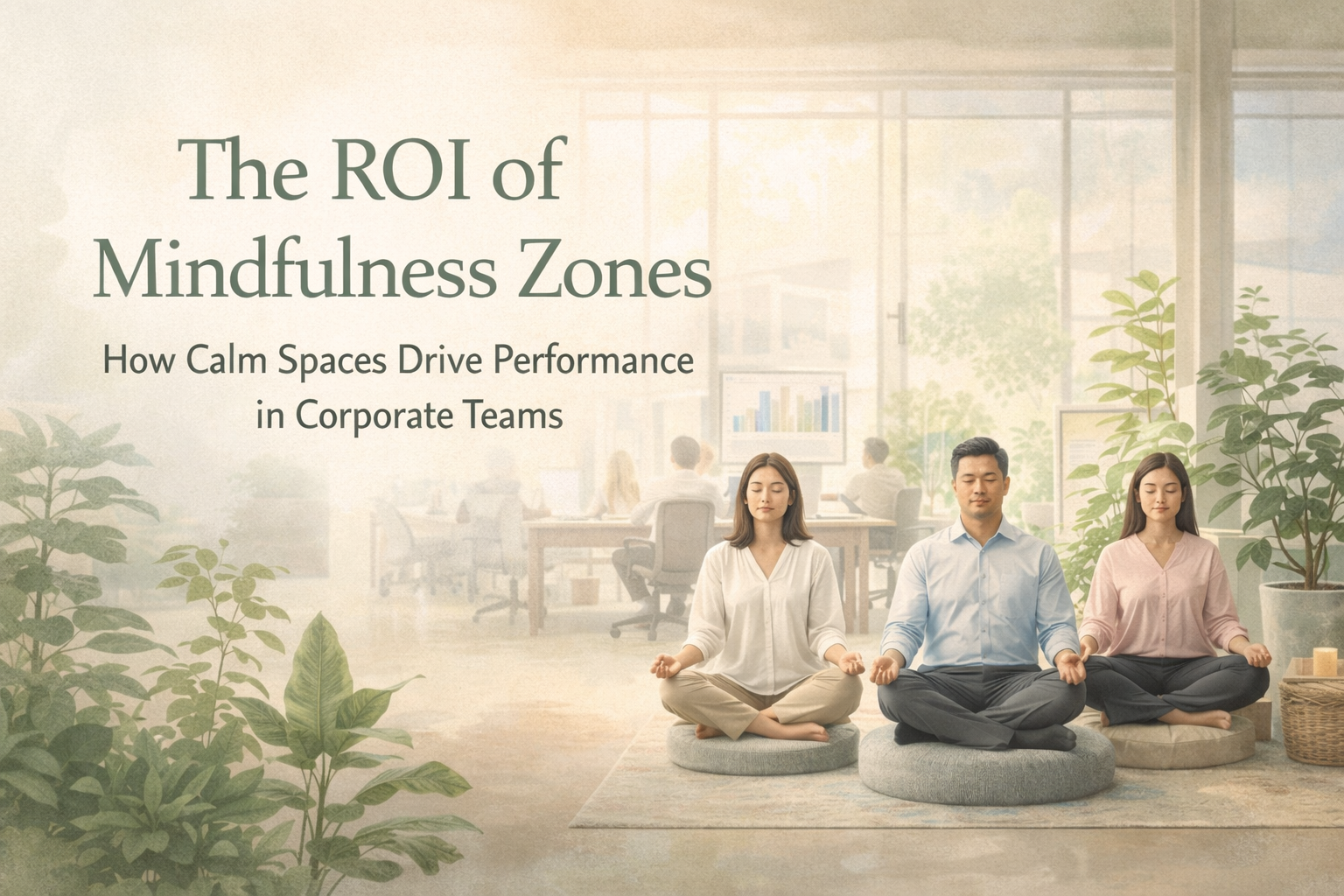
Most companies still treat employee wellbeing as a “nice-to-have.” That’s a mistake.
Because the data is clear: mental fatigue is directly killing productivity, retention, and decision quality. And mindfulness zones are one of the highest ROI, lowest cost interventions you can implement.
What Is a Mindfulness Zone (In Business Terms)?
Strip away the wellness language.
A mindfulness zone is a performance recovery system:
- Reduces cognitive overload
- Improves focus cycles
- Enables faster mental reset
If you’ve read 👉 https://zariyaa.in/blogs/workplace-wellbeing/what-is-a-zen-space-design-guide-for-workplaces you already know—it’s not about decor, it’s about mental state optimization.
The Real Cost of Ignoring This
Let’s quantify the problem:
- Employees lose 2.1 hours/day to distractions and mental fatigue
- Burnout increases attrition risk by 2.6x
- Decision fatigue reduces output quality (especially in leadership roles)
This is not HR fluff. This is revenue leakage.
ROI Breakdown (Hard Numbers, No Fluff)
1. Productivity Gain: +15–25%
Short mindfulness breaks:
- Improve attention span
- Reduce context switching
Even a 10-minute reset can restore focus for the next 60–90 minutes.
If your team bills ₹10L/month → A 15% gain = ₹1.5L extra output without hiring
2. Reduced Burnout = Lower Attrition Cost
Replacing one employee costs:
- 30%–200% of their annual salary
Mindfulness zones reduce:
- Chronic stress
- Emotional exhaustion
If you prevent even 2 resignations/year, you save lakhs instantly.
For deeper understanding, explore: 👉 https://zariyaa.in/blogs/workplace-wellbeing/5-ways-to-balance-work-life-without-burning-out
3. Better Decision-Making (Leadership ROI)
Leaders operate in high cognitive load environments.
Mindfulness improves:
- Clarity
- Emotional regulation
- Strategic thinking
Better decisions = Better hiring, better campaigns, better revenue outcomes.
4. Absenteeism Reduction: 10–20%
Stress-related sick leaves are rising.
Mindfulness spaces:
- Reduce anxiety
- Improve emotional stability
Fewer sick days = more consistent output.
5. Employer Branding Advantage
Top talent today evaluates:
- Culture
- Mental wellbeing
- Work environment
A visible mindfulness zone signals: 👉 “We care about how you perform, not just what you deliver.”
This directly impacts hiring quality.
Cost vs ROI (Reality Check)
Setup Cost (India)
- Basic setup: ₹10,000 – ₹50,000
- Mid-level: ₹50,000 – ₹2L
- Premium: ₹2L+
ROI Timeline
- Productivity impact: Within 2–4 weeks
- Culture shift: 1–3 months
- Retention impact: 3–6 months
Even a conservative estimate: 👉 Payback period = < 60 days
Why Most Companies Fail to See ROI
Because they do it wrong:
- No usage guidelines
- No leadership adoption
- No integration into workflow
- Treated as a “break room”
If it’s not structured, it won’t work.
How to Maximize ROI (Execution Framework)
1. Define Clear Use Cases
- Focus reset
- Stress recovery
- Short meditation
2. Limit Usage (Scarcity Drives Value)
- 15–20 min slots
- Silent-only rule
3. Train Employees (Critical)
Most people don’t know how to use the space.
Introduce:
- Breathing techniques
- Guided sessions
You can integrate practices from: 👉 https://zariyaa.in/blogs/mindfulness/the-hidden-rituals-highly-resilient-people-do-before-breakfast
4. Make It Leadership-Driven
If leaders don’t use it, adoption dies.
5. Track Metrics
- Productivity
- Stress surveys
- Retention
No measurement = no ROI visibility.
Final Take
Mindfulness zones are not about making employees “feel good.” They are about making teams perform better, longer, and smarter.
You’re not investing in relaxation. You’re investing in cognitive performance infrastructure.
And in today’s work environment— that’s one of the smartest investments you can make.